Getting started on a gym journey can be exciting. You can enter the gym with one clear goal – to build muscle, lose weight, improve strength, or just get healthier. However, common mistakes in Gym can often prevent beginners from achieving those goals. But training hard is not the only thing that yields results. The way you train, recover and structure your routine can make a huge difference to your progress.
Many beginners make simple mistakes without realizing it. https://www.poornima.odmtai.com/5-best-strength-training-exercises-for-beginners/Getting too serious too quickly, skipping warm-ups, using incorrect form, following random workouts, missing rest days, and comparing your progress with others can turn a positive fitness journey into a frustrating experience. These common mistakes in gym workouts can slow your progress and may even increase the risk of unnecessary strain or injury.
The good news is that most common mistakes in gym are fairly easy to avoid if you know what to look for. Beginners should not try to do everything at once, but should focus on learning proper technique, setting realistic workout goals, staying consistent, eating properly, and allowing their bodies enough time to recover.
In this guide we are going to talk about 10 common gym mistakes beginners should avoid and how each mistake affects your progress in the gym. Whether you’re a newbie at the gym or looking to improve your current workout, it’s about training smarter, creating better habits, and building a better and sustainable workout journey.
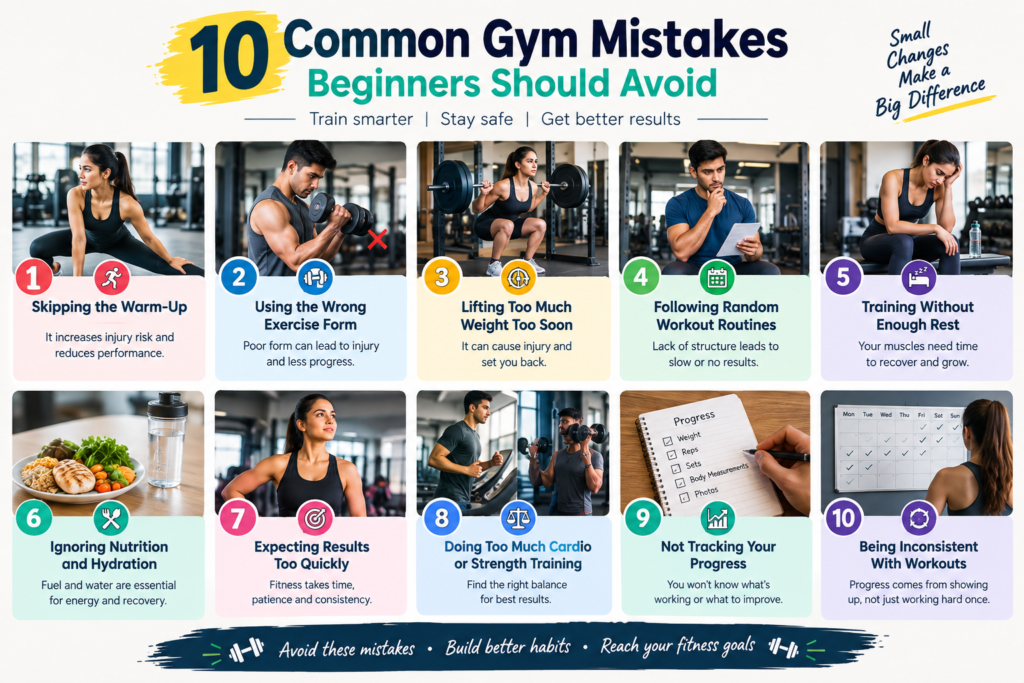
performaSkipping the warm-up is one of the common mistakes in gym workouts, especially among beginners who want to save time. Starting intense exercise with cold muscles can make movements feel harder and less controlled. A proper 5–10 minute warm-up helps increase blood flow, raise muscle temperature, and prepare your joints and muscles for the workout ahead. Start with light activities such as brisk walking, cycling, arm circles, bodyweight squats, or dynamic stretches.
Your warm-up should also match the workout you are about to perform. Before a leg workout, prepare your hips, knees, ankles, and leg muscles with suitable movements. For an upper-body session, gradually prepare your shoulders, elbows, and upper back. Avoiding this common mistake in gym training can help you begin your workout with better movement, control, and preparation.
One of the common mistakes in gym workouts is trying to lift heavy weights before learning the correct movement pattern. Beginners should focus on mastering proper technique first rather than trying to lift as much as possible. Control your body during every repetition, maintain proper alignment, and choose a weight that allows you to complete the exercise with good form.
A simple approach is “form first, weight second.” Once you can perform an exercise comfortably and consistently with proper technique, you can gradually increase the resistance. Avoiding this and other common mistakes in gym training can help beginners develop better workout habits and build a stronger foundation for their fitness journey.
Starting with heavy weights may feel like it gets you going faster, but lifting too much weight too soon is one of the common mistakes in gym training. It can cause poor form, unnecessary strain, and setbacks. Beginners should use a weight that is manageable and concentrate on the right technique. Once you develop good form, gradually add more weight. This approach can help you build strength safely and efficiently.
Best Options:
To keep your interest in exercise, vary your workouts, but it’s difficult to make consistent progress when you choose exercises randomly. One of the common mistakes in gym routines is exercising without a clear goal or structure. A better approach is to combine different movements based on your fitness level, goals, available time, and recovery needs.
One of the common mistakes in gym routines is training hard every day without giving your body enough time to recover. Muscles need adequate rest to repair and become stronger. Without enough recovery, you may experience constant soreness, low energy, poor workout performance, and a higher risk of injury.
One of the common mistakes in gym is ignoring proper nutrition and hydration. If you are not eating and drinking enough, your workout performance may suffer and recovery can take longer. Even a well-planned workout can be less effective when your body does not get adequate nutrients and fluids.
Beginners expect results in days and weeks. Getting fit takes time. Too much progress too soon breeds overtraining, loss of motivation and unrealistic expectations. Don’t expect instant results. Consistency is key in your training, nutrition, recovery and small improvements. Judge strength, endurance, energy and consistency, not just looks. Let your body adapt.
One of the common mistakes in gym routines is believing that more training always means faster progress. Too much cardio or strength training without enough recovery can lead to tiredness, reduced performance, aching muscles, and lack of motivation.
Instead of doing hard workouts every day, balance training with proper recovery, sleep, and nutrition. Gradually increase your workout intensity and follow a well-planned training program. Your body needs rest or active-recovery days to repair, adapt, and improve.
Key Takeaways:
Most beginners workout regularly but don’t keep track of what they are doing. Without tracking weights, reps, sets, body measurements or consistency of workouts, it’s hard to tell if you’re really getting better.https://en.wikipedia.org/wiki/Fitness
Keep a simple workout log and update it after every session. Log your workouts, weights, reps and personal records. Seeing this information lets you see your progress, change your workouts and stay motivated if you don’t see changes right away.
Being inconsistent with workouts is one of the common mistakes in gym routines that can slow your fitness progress. Missing workouts regularly makes it harder to build strength, improve endurance, and achieve consistent results. Instead of trying to be perfect, choose a workout plan that fits your lifestyle and is realistic to follow. Start with shorter workouts, track your progress, and focus on showing up regularly. Occasional intense workouts are generally less sustainable than consistent, moderate exercise.
5 Tips to Avoid This Common Mistake